How to Make a 4-Week Home Workout Plan Work for You
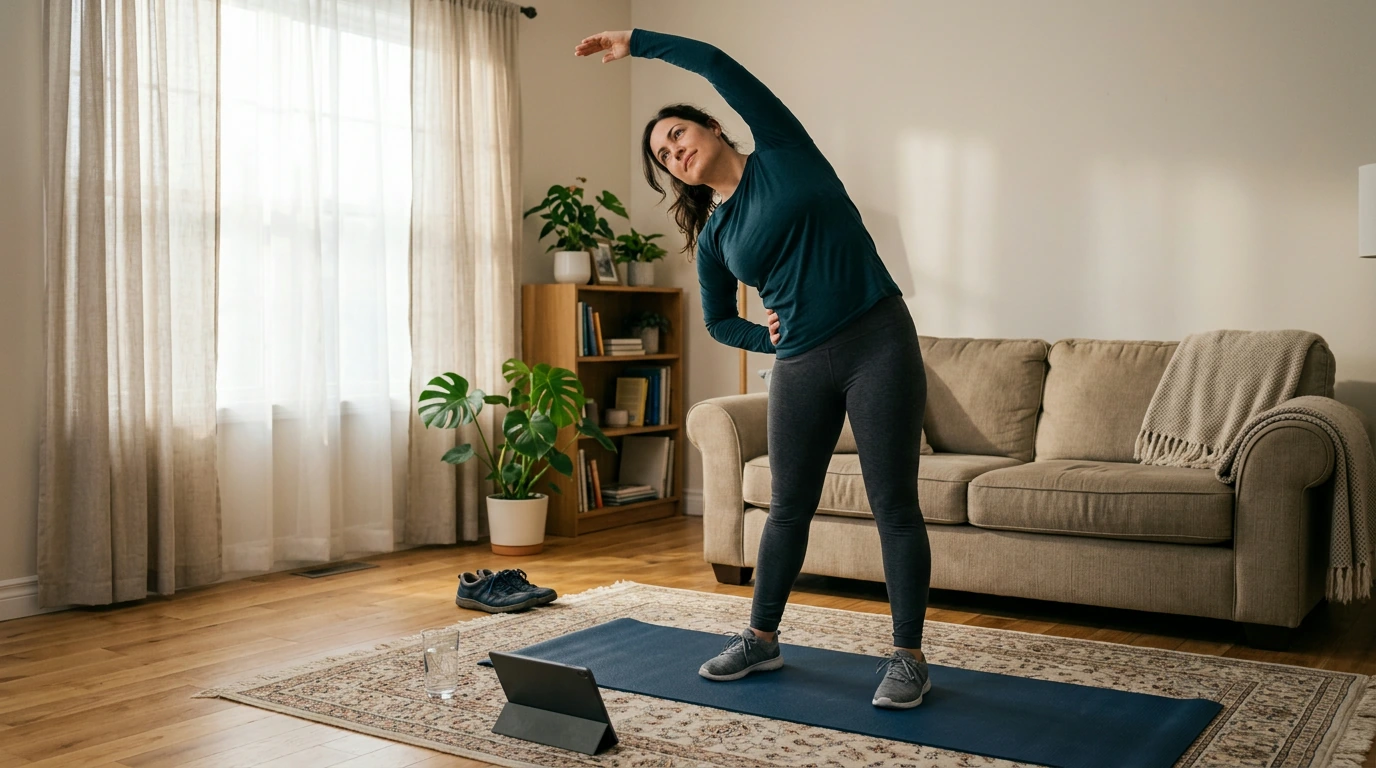
A home workout routine is easier to follow when you already know what comes next. Our Fit at Home four-week workout plan brings daily workouts and stretches together in a PDF, so you can spend less time deciding what to do and more time making room to move. The most useful plan is one you can fit into your actual week, at a pace that suits your starting point.
Start with a space you can use consistently
You do not need a dedicated home gym to begin. Choose a spot where you can move your arms and legs comfortably without hitting furniture. Keep water within reach, and make it easy to open the guide before you start. A living room or other shared space can work if you can clear it when it is time to exercise.
Before each session, take a quick look at the floor. Move cords and loose objects out of the way, watch for slippery surfaces, and wear supportive footwear when it makes sense for the activity. This short reset can become part of your routine. With the day’s workout and stretches in one guide, you can focus on preparing your space rather than building a session from scratch.
Make the four weeks fit your real schedule
Look ahead before the week begins and reserve workout windows you are likely to keep. A repeatable 20-minute window is more useful than an ambitious hour that keeps getting crowded out. Think about work, family responsibilities, and the times of day when you usually have enough energy to move.
The checklist below is an example of how to organize your time around a daily guide. It is not the Fit at Home PDF’s exact workout sequence.
| When | What to prepare | Helpful reminder |
|---|---|---|
| Before the week begins | Choose likely workout times | Keep the plan realistic |
| Before a session | Clear a safe space and open the guide | Start at a manageable pace |
| After a session | Note what felt comfortable or difficult | Use those notes when planning ahead |
| At week’s end | Review which times worked | Adjust next week’s schedule if needed |
Leave yourself room to change a workout time when life changes. If you miss a day, you do not have to cram extra exercise into the next one. Resume at a manageable point and revise your schedule if the same conflict keeps coming up. Consistency can mean returning to the routine, even when one week looks different from the last.
Use minimal equipment without overcomplicating it
A minimal-equipment guide can make getting started simpler: fewer items to gather means less setup between you and a session. It does not mean every exercise is equipment-free. Read the instructions for the workout you plan to do, then gather only what that session calls for. Keep the area around you clear once you begin.
Choose a movement range and pace you can control. You should be able to pay attention to how an exercise feels rather than rushing to finish it. Ordinary effort may feel challenging, but pain is a reason to stop, not a target to push through. Seek appropriate professional guidance if a movement causes pain or you are unsure how to continue safely.
For broader context on building an activity routine, the CDC’s adult physical activity guidance covers recommended types and amounts of movement. You can use that guidance alongside your own needs without treating a four-week plan as a race toward a particular number.
Give stretching its own place in the routine
Fit at Home includes stretches as well as daily workouts. Give them a place in your planned session instead of closing the PDF after the workout and hoping you remember them later. Follow the guide’s directions, move gently, and avoid bouncing or forcing yourself into a position. A stretch should not become a test of how far you can push.
If you are injured, pregnant, managing a medical condition, or uncertain which activities are suitable for you, consult a qualified healthcare professional before starting or changing your exercise routine. The NHS exercise resources also offer general information about staying active, but they cannot replace advice tailored to your circumstances.
Track progress beyond finishing every session
At the end of each week, notice what helped you show up. Did you make time to move more often than before? Do the exercise directions feel more familiar? Was a morning session easier to maintain than an evening one? A few notes can help you make practical changes for the following week.
Our team also knows that making space for quiet time can be part of planning a balanced week. If that interests you, our Meditations for Self-Love & Worthiness audio course is a separate option for guided meditation; it is not a substitute for a workout or medical care. When you are ready for a ready-to-follow exercise PDF, explore our Fit at Home plan and choose a starting pace you can sustain.
FAQ
Do I need a home gym to use Fit at Home?
No dedicated home gym is needed. The guide is described as requiring minimal equipment; read each session’s instructions for what you need and make sure you have a safe space to move.
What if I miss a day of the four-week plan?
One missed session does not have to end your routine. Resume at a manageable point and adjust your schedule rather than trying to make up too much at once.
Is this workout guide suitable for complete beginners?
The product description does not specify a fitness level. Read the exercise directions, work at a comfortable pace, and seek professional advice if you have health concerns or are uncertain about an exercise.











Leave a comment